


She is twenty-eight. She works in Accra and has been well until last month, when her right eye started to blur. The optician changes her glasses. Nothing helps. Then the pain — sharp pain when she moves the eye. At a district hospital in Kumasi, someone mentions a possible eye infection and sends her home with drops. Two weeks later she is better. She forgets about it. Six months pass. Numbness creeps up her left leg. Fatigue so heavy she can barely finish a shift. She sits in a hot trotro one afternoon and her symptoms flare — the leg weakness, the tingling, everything worse until she gets home and cools down. At Tamale Teaching Hospital, after a careful history and an MRI, the pieces finally connect: multiple sclerosis. That pattern — young woman, vision trouble, relapses, heat sensitivity — is not rare. It is, for many patients, how MS announces itself.
What Multiple Sclerosis Actually Is
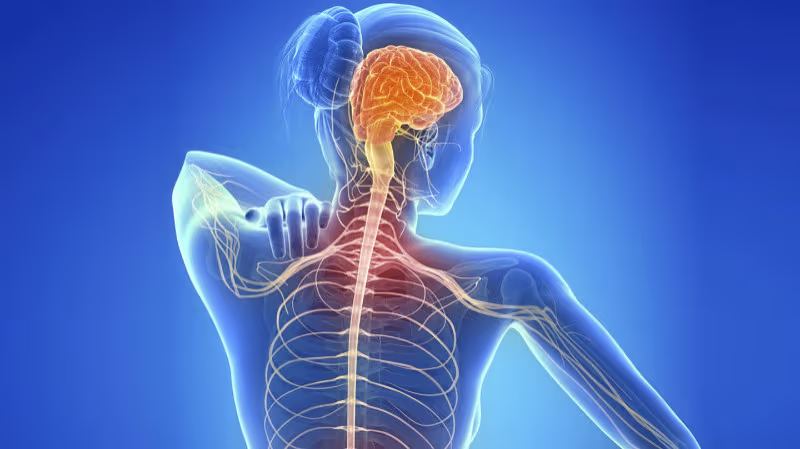
Multiple sclerosis is a chronic autoimmune disease of the central nervous system. The immune system mistakenly attacks myelin, the protective sheath around nerve fibres in the brain and spinal cord. As myelin is damaged, nerve signals slow down or become blocked. The name tells the story: multiple refers to the many areas of damage; sclerosis refers to scar tissue — plaques — that form where myelin has been destroyed.

MS is one of the most important neurological disorders affecting young adults worldwide. It can affect movement, sensation, vision, coordination, memory, and emotional well-being. Some people live with mild symptoms and long periods of stability; others develop progressive disability over time. No two patients experience exactly the same pattern — because the disease can strike different parts of the nervous system in different ways. There is currently no cure. But advances in diagnosis, medications, rehabilitation, and supportive care have significantly improved quality of life and slowed disease progression for many
patients.
Who Gets MS — and Why It Matters in Ghana
MS affects millions of people worldwide. It commonly develops between ages 20 and 40. Women are affected more often than men — roughly two to three times more likely. Geographically, MS is more common in Europe, North America, and temperate climates, and less common near the equator. That does not mean it does not occur in Ghana. It means clinicians at CHPS compounds, district hospitals, and regional centres must keep it on the differential when a young adult presents with unexplained neurological symptoms — especially when those symptoms relapse and remit. The exact cause remains unknown. MS is believed to result from interaction between genetic, environmental, and immune factors:
Autoimmune dysfunction — the immune system attacks myelin in the CNS
Genetic factors — MS is not directly inherited, but family history increases risk; certain immune-regulation genes are associated
Viral infections — some viruses may trigger abnormal immune responses; Epstein-Barr virus (EBV) infection has been strongly linked to MS risk
Vitamin D deficiency — low levels may increase susceptibility, which may partly explain higher rates in colder climates with reduced sunlight
Smoking — increases both risk and disease severity
Environmental factors — geographical location and exposures may influence development
Other autoimmune diseases — type 1 diabetes and thyroid disease, among others, may increase risk MS is not contagious.
Symptoms may come and go. Heat often worsens symptoms — a feature called Uhthoff’s phenomenon — which matters in Ghana’s climate when patients report flares after exertion, fever, or hot environments.
Types of MS: Four Clinical Patterns
MS is classified into several clinical forms:
Relapsing-remitting MS (RRMS) is the most common type. Patients have attacks (relapses) followed by periods of recovery (remission). Symptoms may partially or completely improve between attacks.
Secondary progressive MS (SPMS) begins as relapsing-remitting disease but later progresses steadily with worsening disability.
Primary progressive MS (PPMS) involves symptoms that worsen gradually from the beginning without clear relapses.
Progressive-relapsing MS is rare — progressive disease with acute relapses on top. Understanding the type guides prognosis and treatment. Factors associated with better prognosis include female gender, early diagnosis, relapsing-remitting type, and good recovery from relapses.
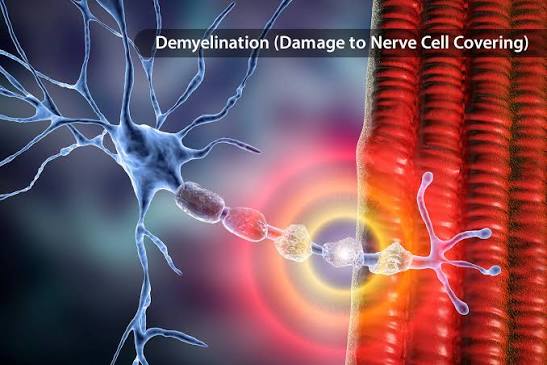
How the Disease Damages the Nervous System The disease process follows a clear sequence that clinicians sometimes remember as IDPA:
I — Immune attack: abnormal immune cells become activated against myelin proteins
D — Demyelination: immune cells cross the blood-brain barrier, enter the CNS, and damage the myelin sheath, disrupting electrical signal transmission
P — Plaque formation: areas of inflammation heal with scar tissue called plaques
A — Axonal injury: over time, underlying nerve fibres are permanently damaged, leading to progressive neurological disability Relapses may last days, weeks, or months. Recovery may be complete or partial. Repeated attacks may eventually cause permanent disability.
What to Look For: Signs and Symptoms
Symptoms vary greatly depending on which part of the nervous system is affected. A useful clinical mnemonic is VISION FAT:
V — Visual problems: blurred vision, double vision, painful eye movement, vision loss; optic neuritis is a classic early presentation
I — Imbalance: unsteady gait, dizziness
S — Sensory loss: numbness, tingling, burning sensations, electric shock sensations
I — Incontinence: urinary urgency, frequency, incontinence, retention
O — Optic neuritis
N — Neurological weakness in arms, legs, or one side of the body
F — Fatigue — one of the most disabling symptoms
A — Ataxia
T — Tremor
Other important features include muscle spasticity (stiff, tight muscles), bowel problems (constipation is common), cognitive problems (memory difficulties, poor concentration, slowed thinking), depression and anxiety, speech and swallowing problems in advanced disease, and sexual dysfunction from neurological and psychological factors. Uhthoff’s phenomenon deserves special mention: symptoms often worsen with heat or fever. In Ghana, patients may not connect a Harmattan afternoon, a hot bath, or a febrile illness with a neurological flare. Ask about it.
Diagnosis: Dissemination in Time and Space
Diagnosis requires evidence of lesions separated in time and space — damage in different nervous system areas at different times.
Clinical assessment
Doctors evaluate neurological symptoms, relapse history, and physical examination findings.
MRI scan
MRI is the most important diagnostic tool. Findings include white matter plaques, demyelinating lesions, and brain and spinal cord abnormalities.
Lumbar puncture
Cerebrospinal fluid may show oligoclonal bands and increased immune activity.
Evoked potentials
These tests measure electrical activity in nerves and help detect slowed nerve conduction.
Blood tests
Used mainly to exclude other diseases.
McDonald criteria
Current diagnosis commonly uses the McDonald criteria, which combine clinical findings, MRI evidence, and CSF analysis to demonstrate dissemination in time and space.
A note for practice in Ghana
MRI and CSF analysis may not be available at every facility. If your clinical suspicion is high — especially in a young woman with relapsing neurological symptoms, optic neuritis, or heat- sensitive flares — refer early to a centre with neurology and radiology capacity. Teaching hospitals in Accra, Kumasi, Tamale, and other regional hubs are often where the diagnostic
pathway completes. Document the relapse pattern carefully before referral.
Complications: What MS Can Do Over Time
MS can lead to many physical and psychological complications. The mnemonic MINDS captures
much of this:
M — Mobility loss: difficulty walking, falls, wheelchair dependence
I — Infections: urinary retention increases infection risk; reduced mobility increases pressure sore risk
N — Neuropathic pain
D — Depression and anxiety
S — Spasticity and contractures from chronic muscle stiffness
Other complications include bladder and kidney problems, cognitive decline, respiratory
complications in advanced disease (weakened respiratory muscles), osteoporosis from reduced mobility, and social and occupational disability affecting employment, relationships, and independence.
Treatment: No Cure, but Real Options
Although there is no cure, treatment can reduce relapses, slow progression, and improve quality of life. Early treatment improves long-term outcomes.
Acute relapses
High-dose corticosteroids reduce inflammation. Methylprednisolone is a common example.
Disease-modifying therapy (DMT)
These medications reduce disease activity. Examples include interferon beta, glatiramer acetate, natalizumab, and ocrelizumab. Access varies by facility and NHIS coverage; referral to a neurology centre helps align patients with appropriate therapy.
Symptomatic treatment
Treatment targets individual symptoms:
Spasticity — baclofen, physiotherapy
Pain — neuropathic pain medications
Bladder dysfunction — anticholinergic medications, bladder training
Fatigue — energy conservation, medications
Rehabilitation
Rehabilitation is extremely important:
Physiotherapy — strength, mobility, balance
Occupational therapy — maintaining independence
Speech therapy — for speech and swallowing difficulties
Psychological support — counselling and support groups for emotional adjustment
Lifestyle and self-care
Regular exercise, balanced diet, smoking cessation, stress management, and adequate sleep
improve overall health. There is no guaranteed prevention, but avoiding smoking and maintaining adequate vitamin D may reduce risk. Pregnancy Many women with MS can have successful pregnancies. Relapse rates often decrease during pregnancy but may increase postpartum.
What Patients and Families Should Know
If you are reading this because your vision blurred and then got better, or because numbness came and went and nobody could explain it — you are not imagining things. MS is unpredictable, but it is real, and it is not your fault. Heat sensitivity is a recognised feature. Cool down during flares. Rest during relapses. Keep a symptom diary — dates, triggers, what improved — and bring it to every appointment. If you are a clinician who sees one young patient a year with relapsing neurological symptoms,
that patient is counting on you to think beyond infection and stress. Refer for MRI when the pattern fits. MS is not contagious, but delay is costly.
Key Takeaways
MS is a chronic autoimmune CNS disease: inflammation, demyelination, and eventual axonal damage
It commonly affects young adults, especially women aged 20–40
Classic early features include optic neuritis, weakness, sensory symptoms, fatigue, and Uhthoff’s phenomenon (heat worsens symptoms)
Diagnosis requires dissemination in time and space — McDonald criteria, MRI, CSF, clinical assessment
Complications span mobility, pain, spasticity, bladder dysfunction, cognition, and mental health
Treatment combines steroids for relapses, disease-modifying therapy, symptomatic care, and rehabilitation
Early diagnosis and appropriate management are essential for independence and quality of life Success in MS is often partial at first — one fewer relapse, a clearer diagnosis, a patient who finally understands why the heat made everything worse.
That partial success is worth pursuing from the first visit where the pieces start to fit.
For specialist neurological care in Ghana, ask your primary clinician about referral to a teaching hospital neurology service. If you are a health worker and want to discuss a suspected case, document the relapse history, note heat sensitivity, and refer without delay when suspicion is high.
Medical disclaimer: This article is for general health education only. It does not replace
examination, diagnosis, or treatment by a qualified doctor. If you have new vision changes,
weakness, numbness, or neurological symptoms that come and go, please seek care at your
nearest health facility.
Disclaimer
The information contained in this post is for general information purposes only. The information is provided by Multiple Sclerosis - Symptoms And Causes and while we endeavour to keep the information up to date and correct, we make no representations or warranties of any kind, express or implied, about the completeness, accuracy, reliability, suitability or availability with respect to the website or the information, products, services, or related graphics contained on the post for any purpose.