
When Irregular Periods Get Blamed on
Stress — Two of three Rotterdam features may be enough — and “just cysts” is rarely the whole story. If you have persistent menstrual irregularities, difficulty conceiving, or symptoms of hormonal imbalance, please seek care at your nearest health facility or women’s health clinic.
A woman in her mid-twenties comes to a women’s health clinic in Tamale because her periods have become unpredictable. Sometimes three months pass with nothing. Sometimes bleeding lasts ten days. The nurse at a previous visit told her it was probably stress from work and university exams. She has acne that will not clear with ordinary creams. Fine dark hair has appeared along her jawline. She has been trying to conceive for over a year without success. She is not dramatically
overweight — but she has gained weight around her middle despite eating much the same as before.
She is not lazy, not careless, and not “just stressed.” She may have polycystic ovary syndrome — one of the most common hormonal disorders affecting women of reproductive age — and she may have had it for years without anyone naming it.
What PCOS Actually Is
Polycystic ovary syndrome (PCOS) is a hormonal and metabolic disorder characterised by ovulatory dysfunction, hyperandrogenism, and polycystic ovarian morphology. It is a complex condition involving the reproductive system, metabolism, and endocrine function. Women with PCOS may develop multiple immature follicles in the ovaries, irregular ovulation,
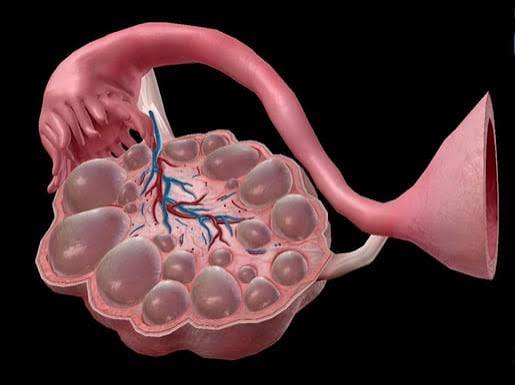
elevated androgen levels, and metabolic disturbances. The term “polycystic ovaries” can be misleading because the ovaries do not contain true cysts. Instead, they contain multiple immature follicles that fail to mature and ovulate properly.

PCOS affects approximately 6–15% of women of reproductive age depending on the diagnostic criteria used. It commonly develops during adolescence or early adulthood but may remain unnoticed until fertility problems arise. The condition affects women of all ethnicities, although symptoms and severity may vary among populations. Modern medical understanding recognises PCOS as more than just an ovarian disorder. It is a multisystem condition involving hormonal imbalance, insulin resistance, chronic inflammation, and genetic predisposition. Despite being common, many women remain undiagnosed for years because symptoms vary greatly from one individual to another.

How Doctors Diagnose It — The Rotterdam Criteria
The most widely accepted diagnostic guideline today is the Rotterdam Criteria, established in 2003 and still commonly used internationally. A diagnosis of PCOS is made when two out of the following three features are present, after excluding other causes:
- Ovulatory dysfunction — oligomenorrhoea (infrequent menstruation), amenorrhoea (absence of menstruation), irregular menstrual cycles, or anovulation
- Hyperandrogenism — clinical (hirsutism, acne, male-pattern hair loss) or biochemical (elevated androgen levels on laboratory testing such as testosterone or DHEAS)
- Polycystic ovarian morphology on ultrasound — enlarged ovaries with multiple small follicles; current ultrasound criteria usually include 20 or more follicles in one ovary or ovarian volume greater than 10 mL Before diagnosing PCOS, other conditions must be excluded: Cushing syndrome, congenital adrenal hyperplasia, hyperprolactinaemia, thyroid disorders, and androgen-secreting tumours. The mnemonic O-H-P captures the framework: Ovulatory dysfunction, Hyperandrogenism, Polycystic ovaries — two out of three suggest PCOS, once mimics are ruled out. That is why the woman whose periods were dismissed as stress deserves a fuller assessment — not because every irregular cycle is PCOS, but because the diagnosis is clinical and requires deliberate exclusion, not assumption.
Before diagnosing Polycystic Ovary Syndrome (PCOS) using the Rotterdam Criteria, other medical conditions that can cause similar symptoms must first be excluded. A diagnosis of PCOS is made when at least two of the following three features are present:
- Oligo-ovulation or Anovulation: Infrequent, irregular, or absent ovulation, usually presenting as irregular menstrual cycles or fewer than eight menstrual periods per year.
- Hyperandrogenism: Excess levels of male hormones (androgens), which may be:
- Clinical, such as excessive facial or body hair (hirsutism), persistent acne, or male-pattern hair loss.
- Biochemical, demonstrated by elevated androgen levels (e.g., testosterone) on laboratory testing.
- Polycystic Ovarian Morphology on Ultrasound: Ultrasound evidence of multiple small follicles in one or both ovaries and/or an increased ovarian volume.
To ensure an accurate diagnosis, healthcare providers must also rule out other disorders that can mimic PCOS, including thyroid disorders, hyperprolactinemia, congenital adrenal hyperplasia, and other endocrine conditions. Only after these alternative diagnoses have been excluded can the Rotterdam Criteria be appropriately applied to confirm PCOS.
Causes: Genetics, Insulin, and More Than One System
The exact cause of PCOS remains unclear, but several interacting factors contribute. Genetic factors play a strong role. PCOS tends to run in families. Women with a mother, sister, or aunt who has PCOS are at increased risk. Multiple genes affecting insulin function, androgen production, and ovarian function are believed to play a role.
Insulin resistance is one of the most important mechanisms. Body tissues respond poorly to insulin; the pancreas produces more insulin; high insulin levels stimulate androgen production by the ovaries. This contributes to irregular ovulation, weight gain, and hyperandrogenism. Hormonal imbalance follows: increased luteinising hormone (LH), elevated androgens, and
reduced follicle maturation disrupt normal ovulation. Obesity does not directly cause PCOS, but it worsens the condition. Excess fat tissue contributes to increased insulin resistance, hormonal imbalance, and chronic inflammation. Chronic low-grade inflammation is common in PCOS and may stimulate excess androgen production.
How the Condition Unfolds — From Insulin to Irregular Cycles
Understanding pathophysiology explains why reproductive and metabolic problems travel
together.
- Insulin resistance develops — the body becomes less sensitive to insulin; the pancreas secretes more, leading to hyperinsulinaemia
- Androgen production increases — high insulin stimulates ovarian theca cells to produce excess androgens such as testosterone; LH levels may rise; sex hormone-binding globulin (SHBG) decreases, raising free testosterone
- Follicular arrest — follicles begin to develop but fail to mature completely; ovulation does not occur; immature follicles accumulate
- Menstrual irregularities follow — cycles become irregular; progesterone production decreases; oestrogen exposure becomes prolonged
- Metabolic consequences accumulate — long-term insulin resistance contributes to obesity, type 2 diabetes, dyslipidaemia, and cardiovascular disease Clinicians sometimes use I-A-F-M: Insulin resistance, Androgen excess, Follicular arrest, Menstrual irregularity.
Signs and Symptoms — Not Every Woman Looks the Same
Symptoms vary widely. Some women have mild disease; others experience severe reproductive and metabolic problems.
Common features include:
Menstrual irregularities — infrequent periods, absent periods, unpredictable bleeding, or heavy menstruation; one of the commonest features
Infertility — failure to ovulate regularly makes conception difficult; PCOS is one of the leading causes of anovulatory infertility
Hirsutism — excess facial, chest, abdominal, or body hair that can significantly affect self-esteem
Acne — persistent acne from androgen excess
Weight gain and obesity — especially central obesity and difficulty losing weight; however, some women with PCOS are lean
Alopecia — male-pattern hair thinning
Acanthosis nigricans — darkening of skin on the neck, armpits, or groin, suggesting insulin resistance
Mood disorders — anxiety, depression, and low self-esteem
Sleep disturbances — especially obstructive sleep apnoea in obese patients
A useful symptom mnemonic is HAIR-ACNE: Hirsutism, Acne, Irregular menstruation, Reproductive problems (infertility), Alopecia, Central obesity, Nigricans (acanthosis nigricans), Emotional problems. On physical examination, doctors may observe obesity, excess hair growth, acne, hypertension, dark skin patches, and hair thinning.
Investigations: History, Labs, and Ultrasound Together
Diagnosis requires a combination of history, examination, laboratory tests, and imaging.
Hormonal tests may include serum testosterone, DHEAS, LH and FSH, prolactin, and thyroid function tests.
Because PCOS is linked to metabolic disease, fasting glucose, HbA1c, and lipid profile should be evaluated.
Pelvic ultrasound may show enlarged ovaries with multiple peripheral follicles — sometimes described as a “string of pearls.”
In Ghana, women’s health clinics and district hospitals may not offer every test on the same day.
That should not delay a thorough history and examination. Irregular cycles plus clinical hyperandrogenism should prompt investigation and referral for ultrasound when local capacity allows.
Complications Worth Taking Seriously
PCOS affects both short-term and long-term health. The mnemonic D-CAMP helps: Diabetes, Cardiovascular disease, Anxiety/depression, Malignancy (endometrial cancer), Pregnancy complications.
Specifically:
Infertility from anovulation
Endometrial hyperplasia and cancer — irregular ovulation leads to prolonged oestrogen exposure without progesterone balance, increasing risk of endometrial thickening and endometrial cancer
Type 2 diabetes mellitus — insulin resistance significantly increases diabetes risk
Cardiovascular disease — hypertension, dyslipidaemia, atherosclerosis
Obesity — which worsens insulin resistance and hormonal imbalance
Pregnancy complications — gestational diabetes, pre-eclampsia, miscarriage, preterm birth
Mental health disorders — depression and anxiety; body image concerns and infertility may
worsen emotional distress
Sleep apnoea — especially in obese individuals
Risk Factors and What Cannot Be Prevented — But Can Be Managed
Several factors increase the likelihood of developing PCOS: family history, obesity (especially abdominal), sedentary lifestyle, insulin resistance, early puberty (some studies suggest earlier puberty may increase risk), and poor diet high in refined carbohydrates and sugars that may worsen symptoms.
There is no guaranteed prevention. Important measures include weight control, regular exercise, healthy diet, and early medical review for menstrual irregularities — the very step that was skipped when stress was blamed for everything.
Management: Lifestyle First, Then Tailored Treatment
Management depends on symptoms, desire for pregnancy, and severity of metabolic disease.
Lifestyle modification is the foundation: weight reduction, healthy diet, exercise, and stress reduction. Even modest weight loss can improve ovulation.
Medical treatment is tailored to need:
Menstrual regulation — combined oral contraceptives help regulate cycles, reduce androgen levels, and improve acne
Insulin sensitisers — metformin improves insulin sensitivity
Treatment for hirsutism — anti-androgen medications such as spironolactone may be used
Fertility treatment — ovulation induction agents including letrozole and clomiphene citrate for women trying to conceive
Living With PCOS — What Patients Should Hear
PCOS is a lifelong condition for many women, but symptoms can be controlled successfully. With proper treatment and support, many women achieve pregnancy, maintain healthy weight, prevent complications, and live normal, productive lives.
Important clinical pearls worth repeating:
Not every woman with ovarian cysts has PCOS
PCOS can occur in lean women
Menstrual irregularity should never be ignored
PCOS is both a reproductive and metabolic disorder If you are reading this because your cycles have never settled, or because conception has taken longer than you hoped — you are not failing. You may need a diagnosis that connects the acne, the hair, the weight change, and the bleeding into one explainable pattern. That connection changes everything.
Key Takeaways
PCOS is a common hormonal and metabolic disorder — ovulatory dysfunction, hyperandrogenism, and polycystic ovarian morphology
Diagnosis uses Rotterdam criteria: two of three features (O-H-P) after excluding other causes
Insulin resistance and androgen excess drive follicular arrest and irregular menstruation
Symptoms range from irregular periods and infertility to hirsutism, acne, metabolic disease, and mood disorders
Long-term risks include diabetes, cardiovascular disease, endometrial cancer, and pregnancy complications
Treatment combines lifestyle change with hormonal regulation, metabolic control, and fertility support when needed Success in PCOS is often partial at first — a regulated cycle, a confirmed ovulation, a patient who finally understands why her body has felt unpredictable for years. That partial success is worth pursuing from the first visit where irregular bleeding is taken seriously instead of filed under stress.
For assessment and ongoing care, visit your nearest women’s health clinic or ask your primary clinician about referral for hormonal testing and pelvic ultrasound. Early diagnosis and proper management make a lasting difference.
Medical disclaimer: This article is for general health education only. It does not replace examination, diagnosis, or treatment by a qualified doctor.
Disclaimer
The information contained in this post is for general information purposes only. The information is provided by Everything You Need To Know About Polycystic Ovarian Syndrom (PCOS) and while we endeavour to keep the information up to date and correct, we make no representations or warranties of any kind, express or implied, about the completeness, accuracy, reliability, suitability or availability with respect to the website or the information, products, services, or related graphics contained on the post for any purpose.