
Medical disclaimer: This article is for general health education only. It does not replace examination, diagnosis, or treatment by a qualified doctor. If you are concerned about your child’s movement, feeding, development, or seizures, please seek care at your nearest health facility or child welfare clinic.
Cerebral Palsy Is Not One Diagnosis — It Is a Pattern Worth Catching Early .The brain injury does not worsen. What happens without support often does.
A midwife at a district maternity unit in Ho notices that a baby born at 34 weeks is not sucking strongly. The mother is tired but attentive — she walked miles for antenatal care and delivered safely. By eight months, the child is not sitting steadily. At the child welfare clinic, relatives say, “Some babies are slow.” They are not wrong that development varies. But the legs stay stiff. When the child is held upright, they scissor. The tone is not normal. This is how cerebral palsy often enters a family’s life: not with a dramatic announcement, but with a milestone quietly missed, then another. Cerebral palsy is one of the most common causes of physical disability in children worldwide.
It is a group of permanent disorders affecting movement, posture, balance, and muscle coordination, caused by damage or abnormal development of the immature brain — usually before, during, or shortly after birth. It is not progressive in the sense that the original brain injury does not worsen over time. That distinction matters for families carrying fear of relentless decline. What does change, often substantially, are the physical complications and functional limitations as the child grows —
unless early support intervenes.
What Cerebral Palsy Actually Means
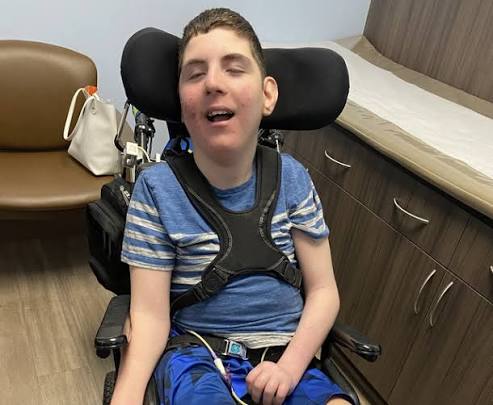
Cerebral palsy is a permanent disorder of movement and posture caused by non-progressive injury or abnormal development of the developing brain. Cerebral — related to the brain. Palsy — weakness or difficulty with movement. The condition mainly affects muscle tone, movement, coordination, balance, and posture. But it is never only motor. Speech, vision, hearing, learning, feeding, seizures, and behaviour may all be involved. Severity varies enormously: some children walk with a mild limp; others cannot sit,
speak, or perform daily activities independently.
Globally, cerebral palsy affects approximately 1–4 children per 1,000 live births. It is more common in premature infants, low birth weight babies, and multiple pregnancies. Improved survival of premature infants — a genuine achievement of better neonatal care — has also increased the number of children living with cerebral palsy. In district maternity settings across Ghana, where referral pathways for preterm labour and neonatal complications are uneven, this epidemiology is not abstract. It is the workload.
How the Brain Injury Happens
Cerebral palsy results from injury to the developing brain. Timing helps classification and prevention thinking.
Prenatal causes (most common overall)
Maternal infections — rubella, toxoplasmosis, cytomegalovirus
Genetic and brain development abnormalities
Placental problems reducing fetal oxygen delivery
Maternal medical conditions — hypertension, diabetes, thyroid disorders
Perinatal causes (during labour and delivery)
Birth asphyxia — lack of oxygen to the baby’s brain
Premature birth — fragile brain tissue vulnerable to injury
Intracranial hemorrhage
Prolonged or difficult labour
Postnatal causes (especially within the first two years)
Severe neonatal jaundice progressing to kernicterus
Meningitis and encephalitis
Head injury from accidents or abuse
Seizures and stroke
Major risk factors
Prematurity is one of the strongest risk factors.
Babies born before 37 weeks face higher risk because the brain is still developing.
Low birth weight increases risk — especially below 2.5 kg, and further below 1.5 kg.
Multiple pregnancy raises rates through prematurity and complications.
Maternal age at extremes — below 20 or above 35 — associates with more pregnancy complications.
Maternal infection during pregnancy, complicated labour (cord prolapse, uterine rupture, severe fetal distress), and neonatal seizures all raise suspicion.
In a district hospital nursery, the combination of prematurity plus feeding difficulty plus abnormal tone should prompt early referral — not waiting for certainty.
Pathophysiology in plain steps
- Brain injury from hypoxia, bleeding, infection, or trauma
- Neuronal damage — cells die or fail to develop normally
- Disruption of motor pathways controlling movement and tone
- Abnormal muscle function — spasticity, weakness, poor coordination
- Secondary musculoskeletal problems over time — muscle shortening, joint stiffness, bone
deformity
The affected brain region determines the clinical picture.
Types of Cerebral Palsy
Classification depends on movement abnormalities.
Spastic cerebral palsy — most common.
Increased muscle tone, stiff muscles, difficulty moving.
Subtypes include spastic hemiplegia (one side), spastic diplegia (mainly legs; common in premature infants), and spastic quadriplegia (all four limbs; usually severe).
Dyskinetic cerebral palsy — involuntary twisting, jerky, or slow movements.
Ataxic cerebral palsy — poor balance, tremors, coordination problems.
Mixed cerebral palsy — combination of patterns.
What To Look For As A Doctor Or Physician Assistant
Symptoms depend on severity and brain region affected.
Early signs in infants matter most.
Watch for developmental delay — late sitting, crawling, or walking.
Abnormal muscle tone that is too stiff or too floppy.
Feeding difficulties with poor sucking and swallowing.
Persistent primitive reflexes that should have disappeared.
Abnormal posture such as scissoring of the legs or arching of the back.
Motor features include spasticity, weakness, poor coordination, abnormal gait (toe walking, leg crossing, limping), and involuntary movements in dyskinetic forms.
Beyond movement, many children have speech and communication problems — slurred speech, delayed language, difficulty expressing needs.
Feeding and swallowing problems may cause choking, malnutrition, and aspiration pneumonia.
Cognitive ability varies: some children have normal intelligence; others have intellectual disability.
Sensory problems include vision and hearing impairment.
Epilepsy commonly coexists. Behavioural challenges such as hyperactivity, anxiety, and emotional difficulties are frequent.
Clinicians sometimes use STIFF as a symptom reminder: Speech difficulty, Tone abnormality, Intellectual delay, Feeding problems, Fits (seizures).
Parents are not “anxious” when they notice stiffness and poor feeding at four months.
They are observing accurately.
The barrier to help is often access — transport, cost, rehabilitation availability — not parental denial.
Diagnosis: Clinical First, Imaging to Support
Diagnosis is mainly clinical. History should cover pregnancy complications, birth events, and developmental milestones. Examination focuses on tone, reflexes, coordination, and movement patterns. MRI is the most useful imaging test, showing malformations, white matter injury, or bleeding. CT may be used when MRI is unavailable. Additional investigations depend on presentation: hearing and vision testing, EEG for seizures, genetic testing when indicated.
Do not delay physiotherapy referral while waiting for MRI at a distant centre if the clinical pattern is clear. Early intervention should not be a luxury item.
Complications That Accumulate Over Time
Because the brain injury is static but the body grows, complications may worsen without treatment.
Contractures from permanent muscle shortening. Scoliosis. Hip dislocation, especially with severe spasticity.
Malnutrition from feeding difficulty. Aspiration pneumonia. Chronic pain from spasm and deformity. Osteoporosis from reduced mobility. Respiratory problems from weak trunk muscles. Mental health issues — depression, anxiety, social isolation. Epilepsy that may persist lifelong.
CHAMPS is a complications mnemonic: Contractures, Hip dislocation, Aspiration, Malnutrition, Pain, Scoliosis.
Management: No Cure, but Real Gains
There is no cure for cerebral palsy. There is substantial room for improvement in function and quality of life through multidisciplinary care.
Physiotherapy is among the most important interventions — improving mobility, strength, flexibility, and balance.
Occupational therapy supports dressing, feeding, writing, and daily tasks. Speech therapy addresses communication, swallowing, and language. Medications such as baclofen, diazepam, or botulinum toxin injections help spasticity; antiepileptic drugs treat seizures. Surgery may be needed for contractures, hip dislocation, or scoliosis. Nutritional support including feeding tubes when necessary. Assistive devices — wheelchairs, walkers, braces, communication aids. Educational support through special or inclusive schooling.
Psychological and family support — parents often need counselling and respite; validation is therapeutic. In Ghana, the gap is rarely knowledge alone. It is continuity — a child seen once by a visiting therapist, then lost to follow-up. Document tone and milestones at child welfare clinics. Refer early. Link families to whatever rehabilitation exists at regional or teaching hospital level.
Prevention: Not All Cases Are Preventable
Risk can be reduced even when elimination is impossible.
Prenatal: good antenatal care, vaccination, infection prevention, control of maternal hypertension and diabetes. Perinatal: skilled delivery care, fetal distress monitoring, preventing birth asphyxia — the core business of strengthening district maternity services. Postnatal: early treatment of jaundice, vaccination, preventing head injuries, prompt treatment of meningitis and encephalitis.
Every improved neonatal unit and every midwife trained to recognise abnormal tone is a prevention programme.
Prognosis and the Social Picture
Outlook depends on severity.
Some individuals live independently; others need lifelong support.
Many attend school, work, build relationships, and live meaningful lives.
Life expectancy has improved with better healthcare — though access remains unequal.
Cerebral palsy affects entire families: education choices, finances, social interaction, community inclusion.
Children deserve equal opportunity, healthcare access, education, respect, and inclusion. The condition is not contagious.
It is not usually progressive at the neurological level.
Severity varies greatly. Early intervention changes trajectories.
What Families and Health Workers Should Know
If you are a parent worried about stiffness, floppiness, poor feeding, or delayed sitting — trust the pattern you see daily. Bring your antenatal and delivery records. Ask specifically about tone and primitive reflexes. Request referral to physiotherapy even before imaging is complete. If you are a midwife, nurse, medical assistant, or medical officer in a district setting: the premature infant who struggled to feed is a follow-up patient, not a discharged success story alone. The eight-month-old who cannot sit and scissors at the legs needs examination, not reassurance by default.
If you are a therapist or specialist: your one visit to a regional hospital may be the only rehabilitation a family receives for months. Teach carers exercises they can repeat at home.
Key Takeaways
Cerebral palsy is permanent motor and posture disorder from non-progressive immature
brain injury
Prematurity, low birth weight, birth asphyxia, neonatal jaundice, and meningitis are major
causes
Spastic diplegia is common in premature infants; severity ranges from mild gait difficulty to
quadriplegia
Diagnosis is clinical; MRI is the best supporting imaging
Early physiotherapy, occupational therapy, speech therapy, and family support improve
outcomes
Complications such as contractures, hip dislocation, aspiration, and epilepsy require long-
term monitoring
Cerebral palsy is not a single story. It is a spectrum — and on that spectrum, early recognition in
a district maternity or child welfare clinic can be the difference between preventable
contractures and a child who walks into school on their own timetable, not someone else’s.
For developmental concerns in infants and children, attend your nearest child welfare clinic or
district hospital. Ask about referral to physiotherapy, occupational therapy, and paediatric
neurology services at regional or teaching hospitals when abnormal tone or delayed milestones
are present.
Disclaimer
The information contained in this post is for general information purposes only. The information is provided by Clinical Overview Of Cerebral Palsy and while we endeavour to keep the information up to date and correct, we make no representations or warranties of any kind, express or implied, about the completeness, accuracy, reliability, suitability or availability with respect to the website or the information, products, services, or related graphics contained on the post for any purpose.