
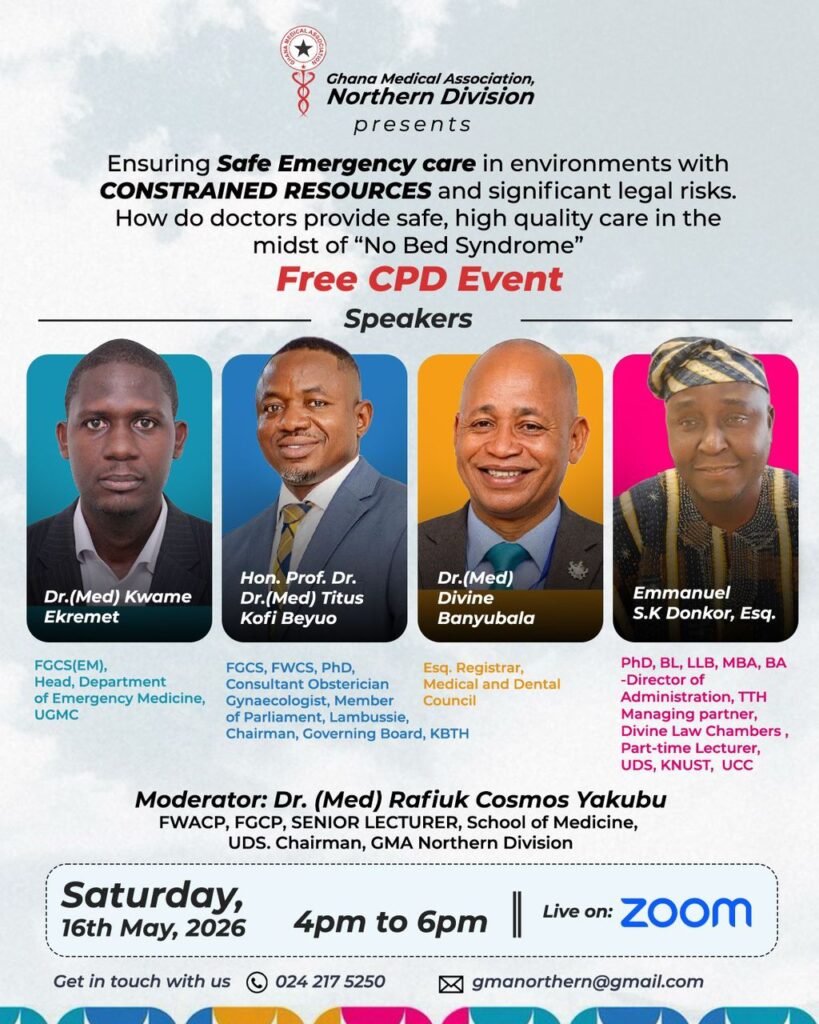
You are invited to register for a Zoom webinar!
Ensuring Safe Emergency Care in Resource-Constrained Environments: The Challenge of “No Bed Syndrome” in Ghana
The death of 29-year-old engineer Charles Amissah after a tragic hit-and-run accident in Accra has once again forced Ghana to confront one of the most painful realities of its healthcare system — the persistent “No Bed Syndrome.” Reports indicate that after sustaining severe injuries, he was moved between major hospitals for nearly three hours because facilities reportedly claimed there were no available beds.
His death sparked national outrage, public debate, and renewed scrutiny of emergency care delivery in Ghana. Beyond the emotional reactions, however, lies an important question: how do doctors and healthcare professionals provide safe, high-quality care in environments where resources are limited, hospitals are overcrowded, and legal risks are significant?
Understanding “No Bed Syndrome”
“No Bed Syndrome” refers to situations where critically ill or injured patients are delayed, referred repeatedly, or denied admission because hospitals lack available beds or capacity. In Ghana, the problem has become symbolic of deeper structural weaknesses within the healthcare system.
The issue is not merely about physical beds. Experts and policymakers increasingly argue that it reflects broader failures involving:
- Poor emergency coordination
- Delayed referral systems
- Inadequate trauma infrastructure
- Shortage of healthcare workers
- Limited ambulance availability
- Weak communication between hospitals
- Overcrowded emergency units
As Ghana’s Deputy Health Minister recently stated, the syndrome is “a systemic failure in the entire emergency system.”
The Ethical Burden on Doctors
For doctors working in Ghanaian emergency departments, the challenge is enormous. Emergency medicine is designed around one fundamental principle: stabilize first, then refer. Yet in resource-constrained environments, physicians often face impossible decisions.
A doctor may encounter:
- Ten critically ill patients but only two beds
- Shortages of oxygen, blood products, or monitors
- Overwhelmed surgical theatres
- Delays in specialist availability
- Ambulances arriving without prior communication
- Families demanding immediate intervention
- Fear of legal liability if outcomes are poor
In such situations, healthcare professionals must rely heavily on triage — the process of prioritizing patients according to the severity of their condition. Triage is not perfect, but it is essential in emergencies where resources cannot meet demand.
The recent discussions following Amissah’s death highlighted an important medical reality: life-saving stabilization does not always require a formal hospital bed.
A severely injured patient can initially be managed:
- On a trolley
- In a treatment corridor
- Inside an ambulance
- In a temporary emergency bay
Critical interventions such as:
- Controlling bleeding
- Securing an airway
- Giving oxygen
- Starting IV fluids
- Immobilizing fractures
- Performing CPR
can begin immediately while arrangements are made for admission or transfer.
Safe Emergency Care in Difficult Conditions
Despite the limitations, many Ghanaian doctors and nurses continue to provide remarkable care under pressure. Safe emergency care in constrained settings depends on several key principles.
1. Rapid Stabilization
The first duty in trauma care is stabilization. Even where beds are unavailable, emergency teams are expected to provide immediate interventions that prevent deterioration.
This means:
- Treating shock aggressively
- Preventing excessive blood loss
- Maintaining breathing and circulation
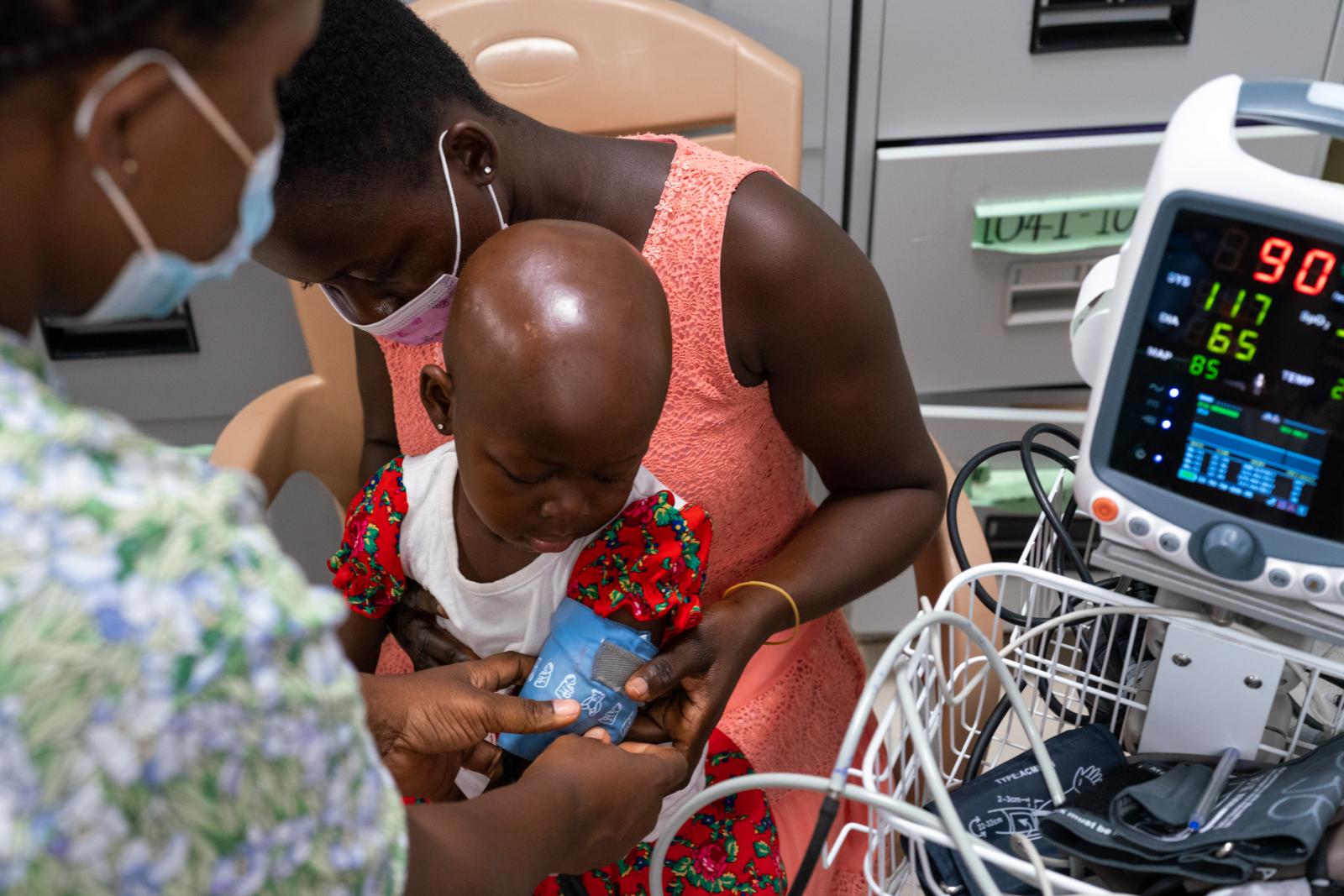
- Monitoring vital signs continuously
In many hospitals, emergency clinicians improvise constantly to save lives under difficult conditions.
2. Effective Communication
Poor communication between ambulances and hospitals worsens delays. Ideally, emergency teams should know:
- Which hospitals have capacity
- Which specialists are available
- Which facilities can handle trauma, neurosurgery, or ICU cases
Without coordinated communication systems, ambulances may move from hospital to hospital while patients deteriorate.
3. Team-Based Emergency Care
Safe care depends not only on doctors but also on nurses, paramedics, laboratory staff, radiographers, and ambulance personnel. In constrained environments, teamwork becomes even more important because every minute matters.
The National Ambulance Service personnel involved in the Amissah case reportedly attempted for hours to secure care for the patient.
4. Clinical Judgment Under Pressure
Doctors frequently make difficult risk-based decisions:
- Who requires immediate surgery?
- Who can safely wait?
- Which patient needs referral?
- Which intervention is most urgent?
These decisions are medically and emotionally exhausting, especially when resources are insufficient.
The Growing Legal Risks
Healthcare professionals in Ghana increasingly face legal and public accountability when emergency care fails. Cases like Amissah’s raise serious questions about negligence, duty of care, and institutional responsibility.
Under Ghana’s Patient Charter, emergency care should not be denied because of inability to pay or lack of bed space.
However, doctors working in overwhelmed systems also fear:
- Lawsuits
- Professional disciplinary action
- Media backlash
- Public anger
- Criminal investigations
This creates tension between clinical realities and public expectations.
Importantly, legal accountability should not focus solely on individual doctors. Many emergency failures reflect systemic deficiencies rather than isolated negligence. When one doctor is responsible for dozens of critically ill patients without adequate equipment or support, patient safety inevitably suffers.
Lessons from the Amissah Tragedy
The death of Charles Amissah should not simply become another headline. It must become a turning point for emergency care reform in Ghana.
Several lessons emerge clearly:
Emergency care must begin immediately
Hospitals should stabilize critically ill patients regardless of bed availability.
Emergency systems require coordination
Ambulances, emergency departments, and referral centers need real-time communication networks.
Trauma care infrastructure must improve
Ghana requires more emergency units, ICU spaces, trauma centers, and trained emergency specialists.
Healthcare workers need protection and support
Doctors and nurses cannot deliver safe care consistently in chronically overstretched environments.
Accountability should include systems
Blame should not fall exclusively on frontline staff when broader institutional failures exist.
A National Responsibility
“No Bed Syndrome” is ultimately not just a medical problem — it is a national systems problem. It reflects infrastructure gaps, underinvestment, workforce shortages, urban overcrowding, and weaknesses in emergency planning.
Yet amid these challenges, Ghanaian healthcare workers continue to save lives daily under extraordinary pressure. Their work often goes unnoticed until tragedy strikes.
The painful death of Charles Amissah reminds the nation that emergency care is not merely about hospital beds. It is about preparedness, coordination, compassion, urgency, and the value a society places on human life.
If Ghana is to prevent future tragedies, reforms must move beyond public outrage toward building a truly responsive emergency healthcare system where no patient is left searching for care while time slips away.
When: May 16, 2026 04:00 PM Greenwich Mean Time
Topic: Free CPD Northern Division
ensuring safe emergency care in environments with constrained resources and a significant legal risks. How do Doctors provide safe , high quality care in the mist of No Bed Syndrome.
Register in advance for this webinar:
CLICK ON THE BLUE LINK TO REGISTER
https://us06web.zoom.us/webinar/register/WN_a0XbcnqQTdKqY_EqofPzlQ
https://us06web.zoom.us/webinar/register/WN_a0XbcnqQTdKqY_EqofPzlQ
https://us06web.zoom.us/webinar/register/WN_a0XbcnqQTdKqY_EqofPzlQ
https://us06web.zoom.us/webinar/register/WN_a0XbcnqQTdKqY_EqofPzlQ
After registering, you will receive a confirmation email containing information about joining the webinar.
Disclaimer
The information contained in this post is for general information purposes only. The information is provided by The Legal Challenge of “No Bed Syndrome” in Ghana and while we endeavour to keep the information up to date and correct, we make no representations or warranties of any kind, express or implied, about the completeness, accuracy, reliability, suitability or availability with respect to the website or the information, products, services, or related graphics contained on the post for any purpose.